

How seawater temperature Affects SWRO performance
seawater reverse osmosis (SWRO) is widely used for producing fresh water from seawater, but membrane performance is not determined by operating pressure alone. Feedwater temperature is another important variable that can noticeably affect permeate flow, energy requirements, salt passage, and overall system operation.
For engineers and plant operators working with Seawater Desalination Equipment, understanding the relationship between temperature and membrane performance is important when selecting equipment, setting operating parameters, and evaluating seasonal changes in production.
In practical applications, seawater temperature may change significantly between seasons, locations, depths, and daily operating periods. A system designed around a specific feedwater condition can therefore show different production results when the actual temperature moves away from the design point.
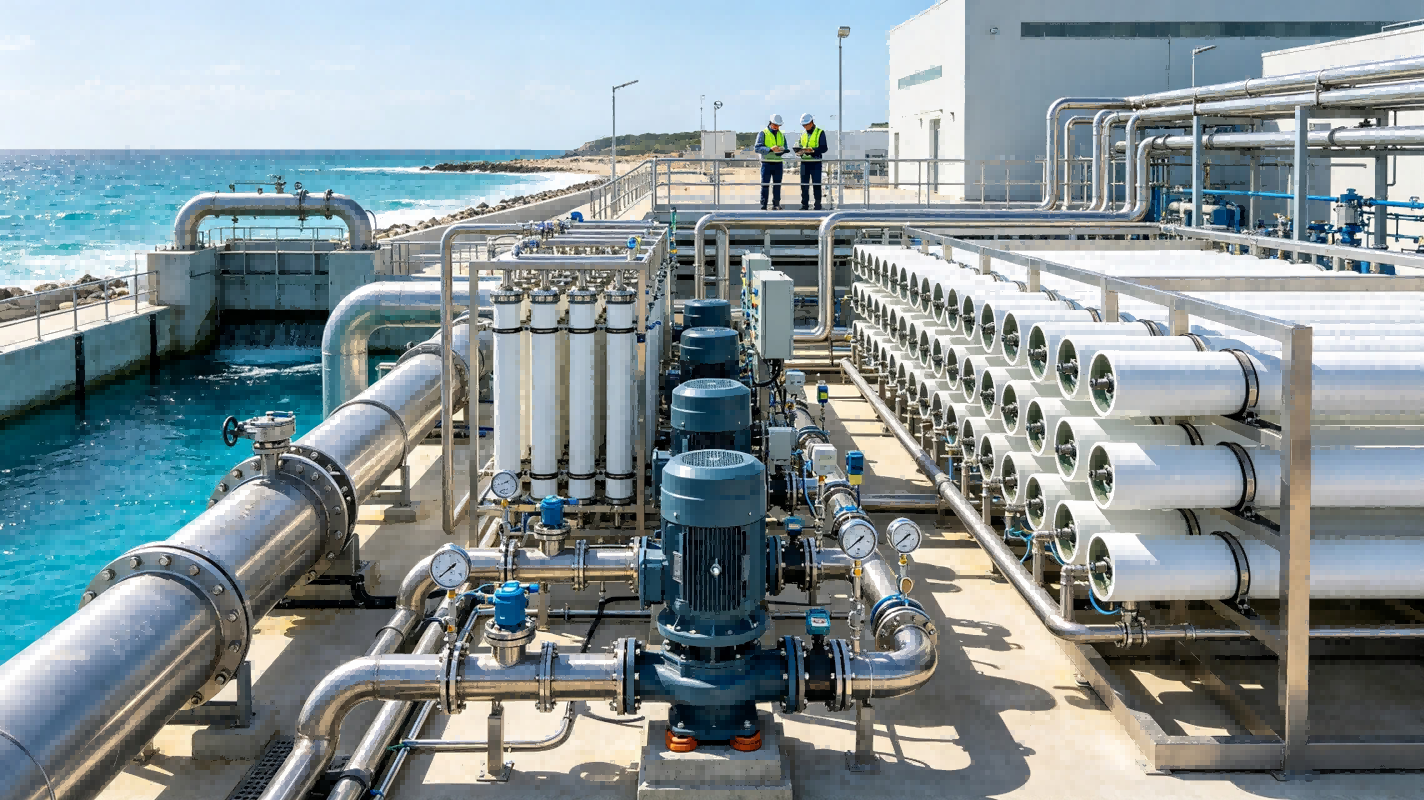
The main reason temperature affects SWRO performance is that water viscosity changes with temperature.
When seawater becomes colder, its viscosity increases. The water becomes more resistant to movement through the RO membrane, which reduces permeate flow under the same pressure conditions. When seawater becomes warmer, viscosity decreases and water can pass through the membrane more easily.
This means that two SWRO systems operating at the same pressure, recovery, and feedwater salinity may produce different amounts of permeate simply because their feedwater temperatures are different.
Temperature also interacts with other feedwater characteristics. Salinity, pressure, membrane condition, pretreatment quality, and recovery rate all influence the final result. Temperature should therefore be treated as one part of the complete operating picture rather than an isolated parameter.
Low seawater temperature is a common concern for desalination plants located in cooler climates or operating during colder seasons.
As temperature decreases, water viscosity increases. The membrane requires more pressure to maintain the same permeate production rate. If the operating pressure remains unchanged, permeate flow will generally decline.
For example, an SWRO system designed for relatively warm seawater may produce less water during a cold winter period even though the feed pump, membrane elements, and other equipment remain unchanged.
This does not necessarily indicate membrane damage or equipment failure. In many cases, it is simply a result of temperature-dependent membrane permeability.
The practical consequences can include:
Lower permeate flow
Higher pressure requirements for a target production rate
Increased specific energy consumption
Greater variation in daily or seasonal production
More complicated production planning
For this reason, equipment selection should consider the lowest expected seawater temperature rather than relying only on an average annual temperature.
The opposite effect occurs when seawater temperature rises.
Warmer water has lower viscosity, allowing water to pass through the RO membrane more readily. Under otherwise similar operating conditions, membrane permeate flow can therefore increase as feedwater temperature rises.
This can be useful when evaluating seasonal production changes. A plant may produce more permeate during warmer periods without increasing the operating pressure.
However, higher temperature should not automatically be treated as an operating advantage.
Membrane manufacturers specify allowable operating temperature ranges, and elevated temperature can influence membrane transport properties and salt passage. Other factors, including feedwater quality, biofouling potential, membrane age, and system recovery, also need to be considered.
The goal is not simply to maximize permeate flow. The operating point needs to balance production, water quality, membrane protection, and energy consumption.
Operating pressure is closely connected to seawater temperature.
When feedwater temperature drops, the increase in viscosity makes water transport through the membrane more difficult. To maintain a similar permeate flow, the system may need a higher feed pressure.
When temperature increases, the required pressure for a particular production target may decrease.
This relationship is particularly important when designing high-capacity Seawater Desalination equipment. If a plant is sized only according to nominal temperature conditions, actual winter performance may fall below the expected production level.
A proper design should examine at least:
Minimum seawater temperature
Maximum seawater temperature
Feedwater salinity
Required permeate production
Target recovery
Membrane operating limits
Available pump pressure
Energy consumption
These factors provide a more realistic basis for selecting pumps, membrane elements, pressure vessels, and related equipment.
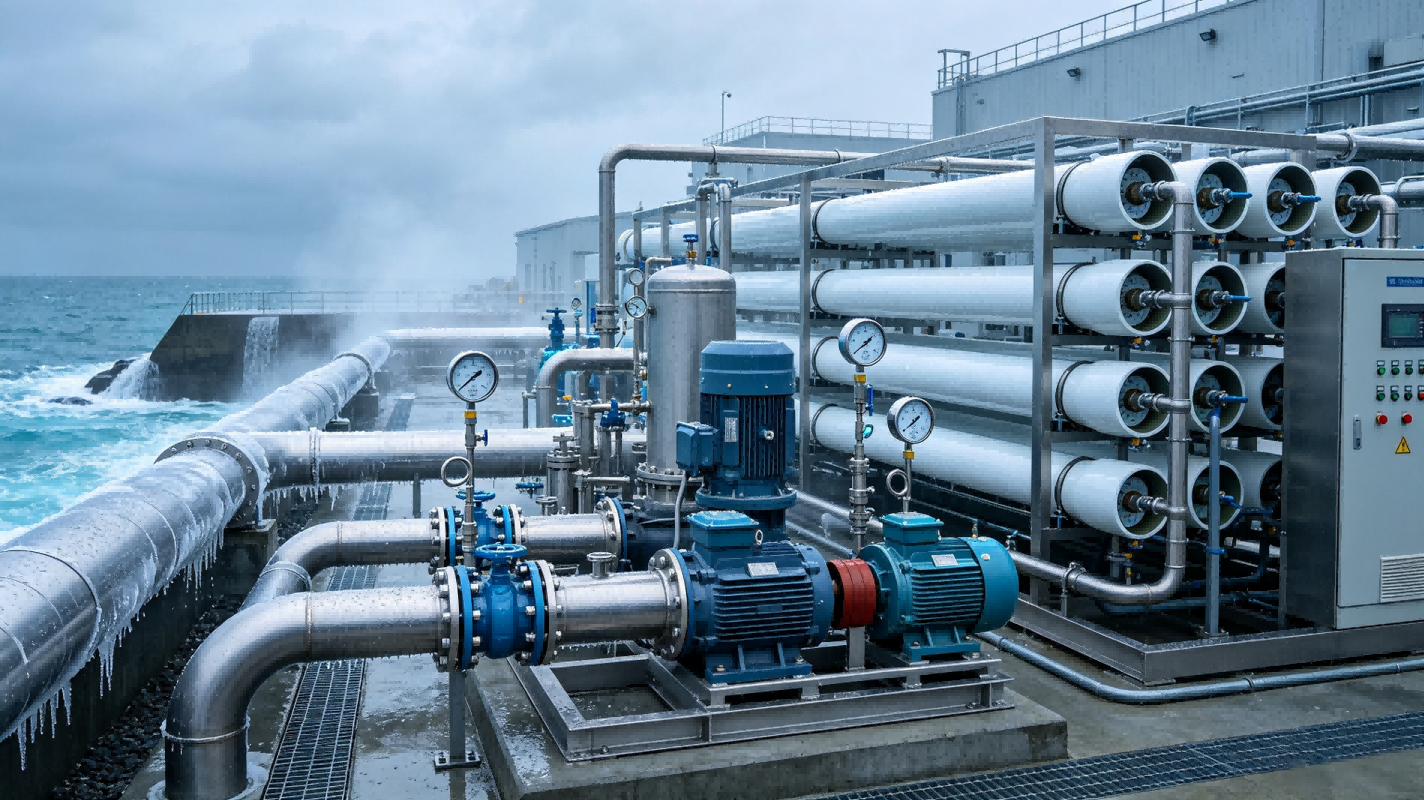
Because temperature naturally changes over time, comparing raw permeate flow data can sometimes give a misleading impression of membrane performance.
Suppose an SWRO plant produces less water in winter than in summer. A simple comparison of daily flow rates may suggest that the membrane has become fouled or deteriorated. However, part of the difference may simply be caused by colder feedwater.
This is why membrane performance is commonly evaluated using normalized data.
Temperature correction or normalization helps operators compare membrane performance under equivalent reference conditions. By accounting for changes in feedwater temperature, pressure, salinity, and other relevant parameters, engineers can better distinguish between normal operating variation and genuine membrane performance decline.
This is especially useful for long-term monitoring.
If normalized permeate flow gradually decreases while operating conditions are properly accounted for, the trend may provide useful evidence of membrane fouling, scaling, compaction, or aging.
In contrast, a temporary reduction in raw permeate flow during a cold period may not represent a permanent membrane problem.
Temperature does not affect only permeate flow.
Changes in temperature can also influence membrane transport behavior and therefore the relationship between water production and salt passage. As membrane permeability changes, operators need to monitor permeate conductivity and other product-water parameters rather than focusing solely on flow.
A well-managed SWRO system normally tracks several parameters together:
Feedwater temperature
Feed pressure
Feed conductivity
Permeate flow
Permeate conductivity
Concentrate flow
Recovery
Differential pressure
Looking at these values together provides a much clearer picture of membrane performance.
For example, a decrease in permeate flow accompanied by lower feedwater temperature may be a normal temperature-related response. A decrease in flow combined with increasing differential pressure and deteriorating normalized performance may point toward fouling or scaling and deserves further investigation.
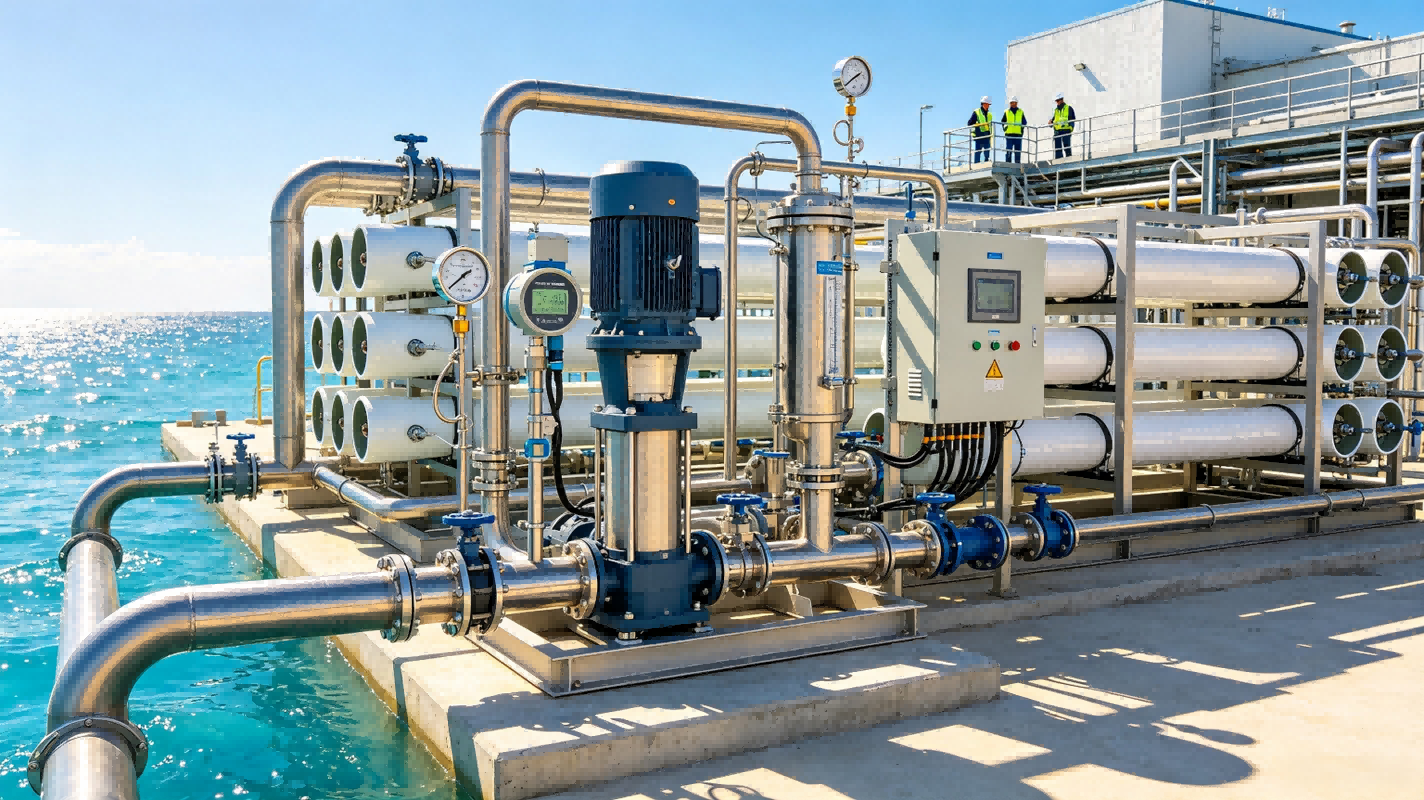
Seasonal variation is particularly important for coastal desalination projects.
A plant located in a region with large annual temperature differences may experience substantial changes in feedwater conditions throughout the year. The system may therefore need to operate at different pressures or production rates depending on the season.
This is one reason project design should use site-specific seawater data whenever possible.
For a new SWRO project, engineers may evaluate historical seawater temperature records together with salinity and intake conditions. If the plant needs to guarantee a specific daily water production throughout the year, the design condition should account for the colder operating period rather than relying only on favorable summer conditions.
Containerized and modular Seawater Desalination Systems also benefit from this approach. A compact system may be easy to install and relocate, but its actual output still depends on local feedwater conditions.
Temperature is only one part of SWRO performance.
Pretreatment remains critical because suspended solids, colloids, microorganisms, organic matter, and other contaminants can affect membrane performance. When feedwater conditions change seasonally, pretreatment performance should also be monitored.
For example, changes in seawater temperature can coincide with changes in biological activity and water quality. Depending on the location, seasonal conditions may increase the risk of biological growth or changes in turbidity.
A reliable pretreatment system can help protect the RO membrane and maintain stable operation.
Typical pretreatment stages may include screening, multimedia filtration, ultrafiltration or microfiltration, cartridge filtration, chemical dosing, and other processes selected according to the actual seawater quality.
The correct configuration depends on the intake method and feedwater characteristics rather than temperature alone.
When seawater temperature changes, operators should avoid making adjustments based only on permeate flow.
A better approach is to review the complete operating dataset.
If feedwater temperature decreases and permeate production falls, the operator can first compare the current conditions with the design and normalized performance data. If the system remains within the membrane manufacturer's operating limits, a controlled pressure adjustment may help maintain production.
However, increasing pressure indefinitely is not an appropriate solution. Pump capacity, membrane pressure limits, energy consumption, recovery, and product-water quality all need to be considered.
If temperature has remained stable but permeate flow continues to decline, operators should investigate other possible causes, such as:
Membrane fouling
Scaling
Cartridge filter blockage
Increased feedwater salinity
Pump performance changes
Excessive pressure drop
Membrane aging
Pretreatment problems
This diagnostic approach helps prevent unnecessary membrane replacement or inappropriate pressure adjustments.
For seawater Desalination Equipment manufacturers and project engineers, temperature should be included during the early design stage.
A practical equipment design should consider the actual seawater conditions at the installation site. This includes minimum and maximum temperature, salinity, intake depth, turbidity, required production, water quality requirements, and seasonal variations.
The design can then determine suitable membrane elements, pressure vessels, high-pressure pumps, energy-recovery equipment, pretreatment systems, instrumentation, and control logic.
For customized projects, these conditions are often more useful than selecting equipment from a standard production table alone.
A system rated for a certain permeate capacity under one temperature and salinity condition may not deliver the same output under another set of conditions. Clear design parameters therefore help both the equipment supplier and the end user establish realistic expectations.
Feedwater temperature is a relatively simple parameter to measure, but its value becomes much greater when it is recorded together with other operating data.
A temperature sensor installed at an appropriate point in the feedwater line can provide continuous information to the control system. Historical data can then be used to identify seasonal patterns and support membrane performance analysis.
For long-term operation, useful records may include:
Daily feedwater temperature
Feed pressure
Permeate flow
Permeate conductivity
Concentrate pressure
Recovery rate
Differential pressure
Normalized permeate flow
With these records, operators can distinguish normal environmental changes from changes associated with equipment or membrane performance.
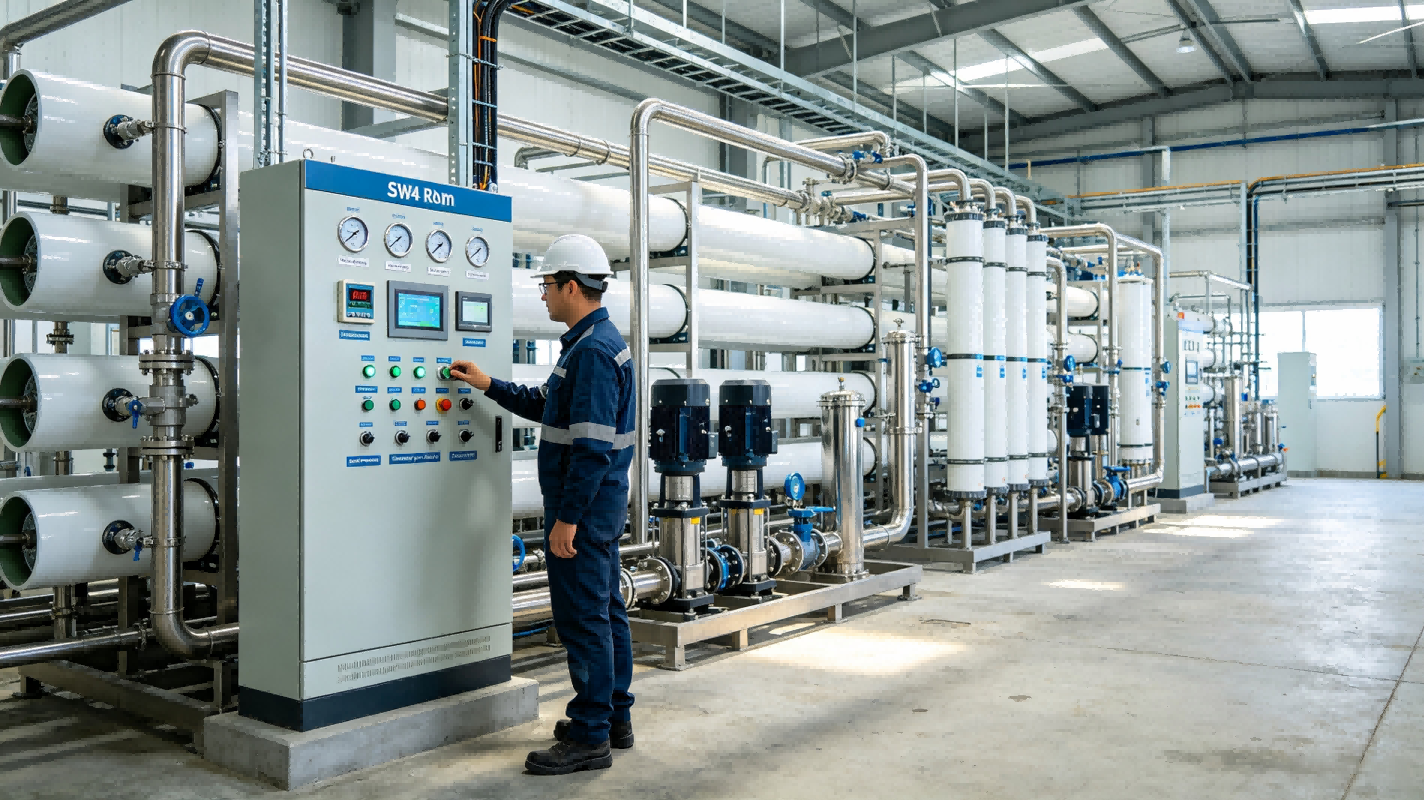
Seawater temperature has a direct influence on SWRO operation because it changes water viscosity and membrane permeability. Cold seawater generally reduces permeate flow and may require higher operating pressure to maintain production, while warmer seawater can increase water flux under comparable conditions.
However, temperature should never be evaluated separately from salinity, pressure, recovery, pretreatment, membrane condition, and product-water quality.
For seawater desalination equipment selection and operation, the most useful approach is to design around real site conditions, monitor temperature continuously, normalize membrane performance where appropriate, and evaluate several operating parameters together.
By taking seawater temperature into account from project design through daily operation, SWRO systems can be managed more predictably across seasonal changes while supporting stable water production and effective membrane operation.
Ushbu veb-sayt veb-saytimizda eng yaxshi tajribaga ega bo'lishingizni ta'minlash uchun cookie-fayllardan foydalanadi.
 English
 Portugues
 Pусский
 Français
 العربية
 ไทย
ไทย Indonesia
 Melayu
 Tiếng Việt
 中文
中文 қазақ
қазақ עִברִית
 မြန်မာ
 ພາສາລາວ
 Filipino
 Кыргызча
 тоҷикӣ
 ខ្មែរ
ខ្មែរ Türkmenler



 Telefon
Izoh
(0)